|
Emily's Biography | The Oeuvre | Flannigan Bio | The Inventions |  |
| Associated Figures | Literary Contest | The Frolics Store | About the Circle |
|
|||||||||||
| Emily Chesley - a biography | |||
|
|
|||
|
Peruse her biography:Formation (1856-1880)London, Ontario (1880-1904) Travels (1904-1919) A Long Twilight (1919-1948) ...Chesleyan Timeline ...The Oeuvre
Read about Emily's First Affair
|
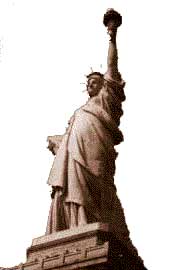
The Delicate Years To his great surprise, Michael Flannigan's prayers were answered deep in a peat bog. The degree of his astonishment was in part dictated by the very fact of the response, for his Catholic upbringing had prepared him equally well for the necessity of supplication and the inevitability of a resounding lack of reply. "God," he had written in his journal one contemplative day, "… and I have been assured that there is one by the most reputable of clerics … God, in his thunderous silence, resembles an employer: he welcomes one's interest in toiling for the firm, yet clearly feels no need to send acknowledgement." The greater part of Michael's surprise, though, was the manner and location in which his heavenward exhortations were met. While testing his latest invention, an automated peat slicer, dicer, packer and stacker in the depths of a peat bog, Michael met a small man, bearded, and dressed in green. When the diminutive man, who introduced himself as Ronald O'Peel, offered to buy the rights to Michael's invention for a reasonable sum, Michael was overjoyed. At last, the opportunity to purchase passage to the New World for his peculiar extended family was at hand. After all, what real good was a peat processing tool in this age of rapid industrialization? And what a strange little man that Ronald O'Peel was, with his shouted parting words, barely heard: "… first step … global tool empire… Po-Peat!" Emily and the rest of Michael's family were thrilled with their trans-Atlantic accommodations in the third class hold of the S.S. Baguette. In so many ways, it was just like home, packed like sardines into their beds, nuzzling up against each other's most pointy parts, and breathing the familiar fetid air of unwashed bodies. For Emily, reveling in both the emerging fire of her delicate years and the burgeoning sweep of her vivid imagination, it was revelatory. Her curvaceous buttocks squeezed surreptitiously by a passing young man named Sean (or was it Seamus?), she glowed within and without, and imagined beginning and ending each day with such pleasures. "Am I part of the throng, or am I simply wearing it?," she wondered dreamily, brushing away the ardent and exploratory caresses of a youthful gentleman named Seamus (or was it Sean?). It remains unclear, but this experience may have been the basis for one of her most poignant and provocative speculative works, "The Titillating Tunnels of Tokyo." Arriving at Ellis Island, in Lady Liberty's fulsome shadow (1), Emily suffered the indignity familiar to so many immigrants, as an official who had been imbibing too heavily of a crusty port over an extended luncheon changed her name, as if by rote. "Now you're Irmgard Phlegmstein," he decreed blearily, as if such an edict could alter the inner essence of the vibrant young woman so closely followed by so many suitors. It took several days, and liberal internal and external application of black coffee to persuade the besotted official of his error, but Irmgard was soon dismissed in favour of Emily. This bizarre event, though, was the beginning of a lifelong quest for identity that sent Emily and her familial entourage (for she, clearly, was the protoplasmic celestial body about which the heavenly objects were beginning to revolve) into the vast central plains of North America. Leaving a broken-hearted trail of Ians, Owens, Euans and Hamishes in her wake, Emily found herself drawn to middle America, to the open skies and windswept expanses of North Dakota. There, in the midst of a sea of sugar beets and rich black soil, both Emily and Michael found themselves at the centre of their respective universes. He found the perfect spot to establish a focal point for his calling, encouraged by the insistence of the local expert in such matters as land and property that the key to success in a venture of this sort was "Locationism, locationism, locationism." She, propelled down an entirely different path, found Norwegians. The family had taken the North Pacific Railroad to its terminus, and ended up in a small farming community near what is now Williston in the Dakota Territory. Fed a steady diet of science from Michael, Emily continued to read her beloved mythology, delighting especially in the bleak world view of the Norse. Perhaps it was this latter reading that left her in a frame of mind to throw herself at the un-named soldier who lived in the sod hut about two miles away. It was a long toss, and unfortunately, the Norwegian was unable to catch it due to a "sexually indescribable fencing wedgie". Emily was outraged and jilted him in a scene of such humiliation, his name has never been mentioned -- or recorded -- since. Meanwhile Michael Flannigan continued to work on his inventions. The most successful of which was the women’s undergarment of the future – the thong. Emily thoroughly endorsed the product - she believed it was better than sliced bread - and was more than willing to show off its many benefits. Thus it came to be that the Ians, Owens, Euans, and Hamishes of the community came to lie broken and panting in the wake of her merchandising frenzy. The town fathers and church leaders, upright in their support of Emily’s youthful exuberance, were content to let the matter run its natural course until she cast aside the Norwegian. Incensed by the callous treatment he received from Emily -- it was an old war wound and it wasn’t his fault -- the community expelled the family. --"Scholarship" by the Flyboy, Next: The Wilderness Years
|
||
|
Join our mailing list or send us email. All written material, graphics, logo, and html coding Web Monkey: Mark A. Rayner
|
 |
||