 |
Emily's Biography | The Oeuvre | Flannigan Bio | The Inventions |  |
| Associated Figures | Literary Contest | The Frolics Store | About the Circle |
|
|
|||||||||||
Associated Figures |
||||||||||||
| ...William Thudworth St.John-Smith | |||||||
 |
|||||||
|
The Poetry of William Thudsworth St.John-Smith "The Meaningless Slaughter
of the Light Brigade" His
|
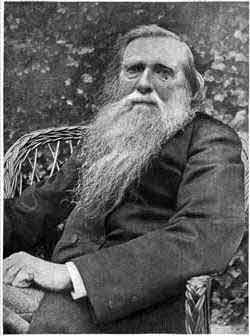
William Thudworth St.John-Smith William Thudworth St.John-Smith, Poet of Spidgy-on-the-Thames, was actually not born in the hamlet that celebrated his name. St. John-Smith (pronounced SinJin-Smith) was in fact born down river in the even lesser known area of Ludlow Marsh. A scholar, a noted diplomat, and a true man of his age
all went to school with St. John Smith. Unfortunately little of their
talent seems to have rubbed off. The great literary critic Roger DeMaid
is said to have died while reading St. John-Smith's poetry. It is, however,
still a subject of great debate as to whether DeMaid's last word "Bad"
referred to St.John-Smith's poetry or the pressed duck sandwich he had
eaten an hour before his death. While there is little argument that
St. John-Smith's poetry was indeed "Bad", there is also mounting
evidence that Roger DeMaid died of botulism.
If there is any common characteristic of St. John Smith's poetry it is a fixation with violence, death and putrefaction. This can be seen in some of his earliest poems such as:
In 1853 the young St. John-Smith was swept up in the excitement of the Crimean War. He joined the Expeditionary Force as a correspondent for the London Sentinel Telegraph and Shopping News. It was there that St. John Smith penned his most nearly memorable poems. These include "The Sun on the Dead Cossack's Brain", "The Meaningless Slaughter of the Light Brigade" (Which was more historically accurate than the other poem about the Light Brigade but unsuccessful for the same reason), "Ode To Johnny the Brave", and the lighthearted "Oh What To Do With A Turk's Severed Foot." This final poem had some success as the lyric for a British marching song of the period. St. John-Smith returned to England after the war to accept a teaching position at Oxford. He was unceremoniously drummed out of the university four years later when it was discovered that his credentials came not from Eton but from the E. Tonne School for Girls, an unremarkable technical school located near Spidgy-on-the-Thames. The Oxford embarrassment pretty much destroyed what little creative gift William Thudworth St. John Smith possessed. Little survives of his life from here on. It is known that he emigrated to Canada in 1865 and had a somewhat successful life as a peanut farmer in Perth County near London in Upper Canada. In a bizarre final act, St. John Smith died at the age of 71 when he was beaten to death with harp at a Dominion Day band recital in Mount Brydges, Canada. The murder, which was committed by an insane women, was completely random. St. John-Smith may have been completely forgotten if not for the people of Spidgy-on-the-Thames who erected a statue to him in 1908. It is not known for sure why the people of Spidgy adopted St. John-Smith as their poet. The only known reference to the hamlet in his poetry comes from "A Day On The River"
One theory has suggested that the statue was sponsored by some of the old matrons of Spidgy who remembered with fondness "that strapping boy who used to hang about the E. Tonne School." In any event the statue stood until an errant Nazi buzz bomb destroyed it and most of Spidgy in 1944. The place is now known as Spidgy Park. --"Scholarship" by Thuder
An afterword:
|
|
|||||
|
|
Emily's
Bio | The
Oeuvre | Flannigan
Bio | Inventions
Join our mailing list or send us email. All written material, graphics, logo, and html coding Web Monkey : Mark A. Rayner
|
 |
|||||