|
Emily's Biography | The Oeuvre | Flannigan Bio | The Inventions |  |
| Associated Figures | Literary Contest | The Frolics Store | About the Circle |
|
|||||||||||
| Emily Chesley - a biography | |||||||||
|
|
|||||||||
|
Peruse her biography:Formation (1856-1880)London, Ontario (1880-1904) Travels (1904-1919) A Long Twilight (1919-1948) ...Chesleyan Timeline ...The Oeuvre
Taking Up the Mantle Read more about this period of her life in the excellent monograph:
|
Taking Up the Mantle (Part 2)
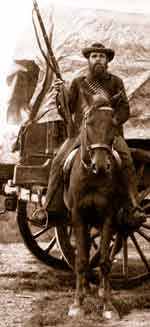
Her wanderings took her, of all places, to South Africa, where the countryside was like a Phanerogram Rendering Tube: aflame and itching with desire. Except in this case, the lust was for war.
Scholars have also noticed that hirsute Norwegians play less of a role in her novels after this period of her life. Emily's publisher, a canny censor-dodger named Reggie String, had started up yet another new venture, called Beaverton Press, and was keen to produce Chesley latest book. The novel was so timely that it virtually flew off the shelves, and so passionately written, even Reverend T.I. Titwarbler, Minister of St. Thomas-among-the-Hungones was moved by the piece:
In 1900, Chesley followed Afrikaans up with a rollicking parody of the public school system (and the class system behind it) called East of Eton. East was a fine novel, but once again the highly speculative nature of the piece, and the lurid descriptions of the schoolboys and their masters, called "brownshifties", caused outright alarm and in one case, a full-blown epileptic seizure. The publisher of this novel, B. Lester (Les) Gripping, III, of Abdocramp Press, refused to print any more of her work. Luckily, Reggie String was once again in business with another new press set up just north of London, called Coldstream Books. He printed Emily's 1901 effort, The Ice Creep, which reviewers described as "debauched and obscene." However, her fellow speculationists were wild with enthusiasm for her work, and pressed her to join the Congress. Predictably, Quentin Farkmee stood in her way:
1901 was a difficult year for Emily, as well as being denied entry to the Canadian Congress of Speculationists, her beloved Uncle died in a tragic accident involving a pair of experimental nostril-hair clippers. (5)
Even Chesley had to admit that she was overdoing it a bit, when the Rev. Martin Bunmuncher wrote to her about the outrageous Arvan story:
She decided that it was time to take a break from her writing, even though she was gaining in popularity amongst her fellow speculationists. It was during this time that she penned her Gaelic Haiku, published by Titan Yore-Finkster Press near the end of 1903. It was at this time that Reggie String, flush with his financial success at Grunt, persuaded Emily to do a reprint of Africaans. The graphic prose had lost none of its punch since its original printing, but in the intervening years, knowledge of the British concentration camps had been suppressed; the narrative focused on this, and again, Emily experienced a notoriety alien to most unsuccessful authors. But still, she was admired by her fellow speculationists, and despite the protests of Quentin Farkmee (who had been defeated in an election to replace him as Secretary General) she delivered her famous speech to the 1904 Convention:
Though this pronouncement brought the speculationists to their feet with wild applause, the authorities were less than pleased. It was this speech, in fact, more than all of her writings combined, which set in motion the series of events that eventually had her in front of the Privy Council in 1908. --"Scholarship" by The Squire <...Back to Part 1: Taking up the mantle Next: The Paris Years
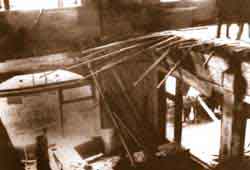
Notes: 1. This was based on an actual incident in London, Ontario. On Monday January 3, 1898 a large crowd gathered on the second floor auditorium to celebrate the election of Mayor John D. Wilson. Suddenly, the floor gave way, tossing 250 people to the ground floor below. A five hundred pound safe slid down on top of the folks, crushing many of the victims. A total of twenty-three people died; 150 were injured. [back] 2. There is good evidence that she went to the Yukon before heading off to South Africa. This is documented in the excellent monograph, Emily in the Yukon. [back] 3. There is some irony in the fact that as her travel guide, Chesley took along Farkmee in the Transvaal. [back] 4. It is also in this period that she met Mohandas Karamchand and the Tolkein family, as explained in The Gandhi Connection. [back] 5. This tragic story is detailed in the excellent monograph, Flannigan: Shear Lunacy. [back]
|
||||||||
|
Join our mailing list or send us email. All written material, graphics, logo, and html coding Web Monkey: Mark A. Rayner
|
 |
||||||||