 The Phrase Freak heartily supports the efforts of Lake Superior State University to find those words that are most obnoxious, most odious, and clearly damaging to the glory that is the English language. However, this year’s list is a little weak.
Many of the words on the list are related to the Internet, and therein, we see the true motivations of this banished words list. It is link bait. (And very effective link bait, too. I noticed they had more than 9,000 shares on Facebook and I myself shared the link on Twitter.) As I say, I agree with many of the words listed, “epic” in particular, but I would like to confine myself to the term “fail”.
Fail is verb. A fine verb to describe something that is at the heart of the human condition. Without failure, there is no opportunity to learn. To live. So to turn it into a noun or adjective is not merely an linguistic excrescence, it’s symptomatic of the meanness of our age. (Unlike the nominators in the banned word list, I don’t want to turn this into a generational issue.)
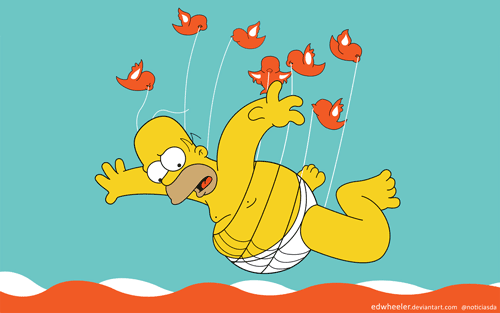
“Fail” is used to describe everything from mistakes, bad judgment, slip ups to non-human server failure, for example Twitter’s infamous “fail whale”. (Pictured above with Homer instead of the whale.) In fact, anything that is less than a success is seen as a “fail”. And this is all from the perspective of the person using the word too, so a “fail” from one, may be a “succeed” from another. (Yes, that would be the antonym in logic of this usage was extended.)
It’s meant to be funny and ironic, but it’s massively overused, though not on an epic scale. (Ahem.)
And instead of being funny, it tends to be mean, snide, snarky, and sometimes simply cruel. But it is now in such common parlance, that I fear this one may become a permanent fixture of our crude and roughshod culture.
You can find the banished words list here, and in yes, the usage of “fail” gets eight gob-smacks out of 10:

 Despite his bulbous legs and intimidating appearance, customers liked Robby’s warmth and genuine desire to make them happy. (He was programmed that way, but still.)
 Thag presents “Less darky!” (circa 11,564 BC) –> Only slide